Evaluating the Undated Weekly Planner KDP Interior for Self-Publishing
Selecting the right interior template is one of the most critical decisions for low-content book publishers on Amazon KDP. The Undated Weekly Planner KDP Interior represents a specific category of functional stationery designed to balance structure with flexibility. Unlike dated planners that carry an expiration date and higher financial risk, undated interiors allow users to begin planning at any time of year. For creators evaluating this specific asset—a 6x9 inch, 105-page PDF with bleed and included Affinity Publisher source files—the decision involves assessing technical specifications, market viability, and long-term utility.
Understanding the Product Specifications
Before integrating this interior into a publishing workflow, it is necessary to understand exactly what constitutes this specific asset. This Undated Weekly Planner KDP Interior is formatted at 6x9 inches, which is widely considered the industry standard for portable personal organizers. This trim size offers a practical balance between writing space and portability, fitting easily into bags without sacrificing usability.
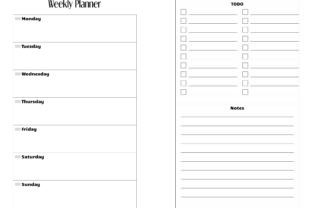
The document comprises 105 pages, structured to accommodate 52 weeks of planning. Crucially, the layout allocates two pages per week: one page dedicated to the weekly schedule or overview, and a facing page reserved specifically for notes and TODO lists. This dual-page spread distinguishes it from simpler checklist journals, providing users with designated space for unstructured reflection alongside structured scheduling. Furthermore, the inclusion of bleed ensures that design elements extending to the edge of the page will print correctly after trimming, eliminating white borders that can make a book appear amateurish.
A significant differentiator for this asset is the inclusion of the Affinity Publisher source file. While many KDP interiors are sold as flattened PDFs only, providing the editable source file grants the publisher full control over typography, margins, and layout adjustments. This capability is essential for creators who wish to differentiate their product in a saturated marketplace rather than publishing an identical duplicate of existing listings.
Strategic Advantages of Undated Formats
The primary reason publishers gravitate toward an Undated Weekly Planner KDP Interior is inventory and listing longevity. Dated planners have a finite sales window; once the calendar year passes, unsold stock becomes obsolete. Undated planners remain evergreen. A listing created today can generate sales three years from now without requiring annual updates or new ISBNs. This reduces the administrative burden of managing multiple yearly editions and allows for cumulative review growth on a single ASIN.
From a user experience perspective, undated formats reduce friction. Consumers often hesitate to purchase dated planners mid-year because they would be paying for unused months. An undated format removes this psychological barrier, making it a viable purchase option regardless of the season. Additionally, the specific inclusion of a dedicated notes and TODO page addresses a common pain point in minimalist planners where users feel forced to cram tasks into small daily boxes. By separating the schedule from the task list, this interior supports varied planning methodologies, including bullet journaling hybrids and traditional agenda styles.
Technical Considerations and Tradeoffs
While the benefits are clear, there are tradeoffs to consider when choosing this specific 105-page configuration. Page count directly impacts printing costs and spine width. At 105 pages, this planner utilizes cream or white paper efficiently, keeping production costs low enough to maintain healthy royalty margins at competitive price points. However, some users prefer high-volume planners with 200+ pages that include monthly calendars, yearly goals, and habit trackers. Publishers must decide whether to position this product as a streamlined, lightweight companion tool or attempt to compete with comprehensive life-management systems.
The 6x9 trim size also presents considerations regarding content density. While portable, the smaller canvas limits the amount of horizontal space available for hourly scheduling blocks. Publishers evaluating this interior should verify that the font sizes and line spacing remain legible after printing. The provided Affinity Publisher source file mitigates this risk by allowing creators to adjust margins or resize text fields if testing reveals readability issues. Relying solely on a pre-made PDF locks the publisher into the original designer’s typographic choices, which may not align with current accessibility standards or aesthetic preferences.
Bleed management is another technical factor. While the file includes bleed, publishers must ensure their cover design accounts for the same safety margins. Misalignment between a bleed-enabled interior and a non-bleed cover file is a frequent cause of KDP rejection or poor print quality. Understanding how the interior’s bleed interacts with the cover wrap is a prerequisite for successful publication.
Assessing Market Fit and Audience Alignment
This Undated Weekly Planner KDP Interior is particularly well-suited for specific niches rather than the general mass market. It aligns strongly with audiences seeking "functional minimalism." Students, freelancers, and professionals who use digital calendars for appointments but need analog space for task management often prefer this two-page spread format. The dedicated TODO page serves as a bridge between digital scheduling and physical note-taking.
Conversely, this interior may be a poor fit for niches requiring specialized tracking. Teachers, nurses, or fitness enthusiasts often require grids, charts, or specific prompts that a generic weekly layout cannot provide. If the target audience requires customization beyond simple dates and notes, the base template—even with source files—may require excessive modification to be viable. In such cases, a niche-specific interior might offer a better return on investment despite potentially higher upfront costs.
Publishers should also evaluate the competitive landscape for "undated weekly planner" keywords. Because the barrier to entry is low, generic terms are highly competitive. Success with this interior typically depends on the creator's ability to leverage the Affinity Publisher source file to create unique value propositions. Modifying headers, adding niche-specific quotes, changing fonts, or adjusting the TODO section layout transforms a commodity asset into a differentiated product. Publishers unwilling or unable to customize the source file should expect to face significant difficulty ranking organically.
Decision Framework for Publishers
Determining whether this asset aligns with business goals requires a practical assessment of resources and strategy. Publishers should select this Undated Weekly Planner KDP Interior if they prioritize evergreen catalog building over seasonal trends, possess basic proficiency in Affinity Publisher (or willingness to learn), and target audiences that value portability and flexible task management. The combination of a ready-to-upload PDF and an editable source file offers a balanced starting point for both beginners needing immediate validation and experienced publishers seeking a customizable foundation.
However, alternatives should be considered if the goal is to dominate a high-ticket niche requiring complex layouts, or if the publisher lacks access to vector editing software. Flat PDF-only templates are cheaper but limit differentiation; hiring a custom designer is more expensive but guarantees uniqueness. This 105-page, 6x9 undated planner occupies the middle ground: a professional-grade, modifiable asset that supports sustainable publishing practices while demanding active engagement from the creator to achieve market relevance.
Ultimately, the value of this interior lies not just in the finished PDF, but in the flexibility afforded by the source file and the timeless nature of the undated format. By carefully weighing the 6x9 form factor against audience needs and utilizing the editing capabilities to establish brand consistency, publishers can effectively integrate this tool into a resilient low-content book portfolio.